Modeling nasal airflows for better pathophysiological understanding
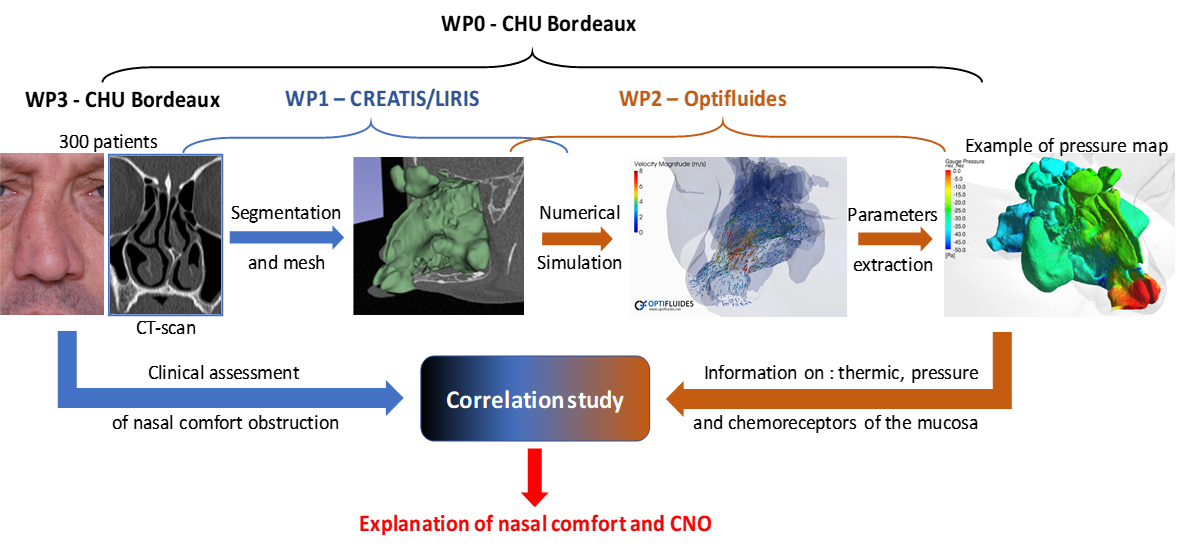
The JUNE project aims to demonstrate that modeling nasal airflows (CFDS) improves the understanding and diagnosis of functional respiratory disorders. It combines medical imaging, artificial intelligence, numerical modeling, and clinical validation to build a reliable digital twin of the nasal cavity. This project will establish quantitative measures of nasal obstruction correlated with clinical criteria.
Consortium
Project details
Chronic Nasal Obstruction (CNO) concerns 20 to 25% of the general population due to several etiologies (septal deviation, obstructive sleep disorders, chronic rhinosinusitis, post-therapeutic cancer quality of life…). It disrupts sleep and deteriorates all the compartments of the quality of life sometimes to depression. To date, nobody knows the exact component of nasal obstruction which is probably the amalgamation of different mucosal informations (thermo-, presso-, chemoreceptors and free end of the fifth nerve) and all measurement attempts have failed by lack of reliability and reproducibility. This major shortcoming of nasal obstruction leads to diagnosis uncertainties, quantification of symptoms and therapeutic. The place of such complementary exam able to do an objective measure of nasal obstruction is expected by the profession. We can do simple analogies: imagine treated anemia without hemoglobin, deafness without audiogram, heart rhythm disorder without electrocardiogram.
Methodology
The project is structured around three main objectives:
Creating a 3D model of the nasal airways from CT images with automatic segmentation and suitable meshing.
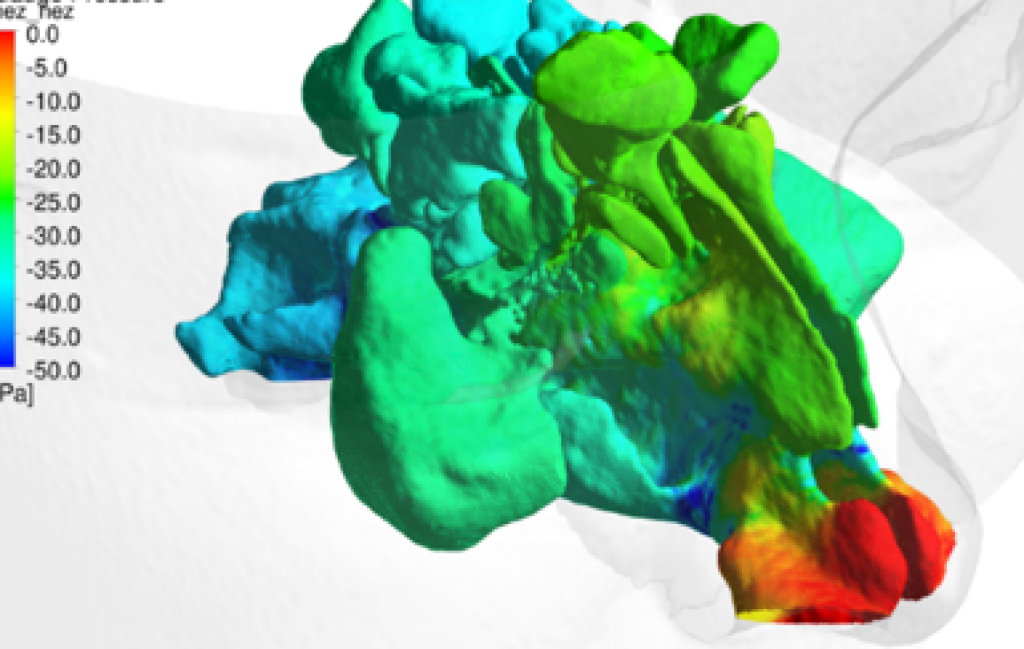
Simulating fluid dynamics and optimizing computation.
Clinical validation through standardized questionnaires and symptom correlation.
Impact
This project addresses major scientific, clinical, and economic issues. It will provide a software tool for clinical practice to objectively measure functional nasal obstruction (NO), much like an audiogram or electrocardiogram.
Quantify nasal obstruction using both radiological and clinical information is now a mandatory work. L. de Gabory